CO Clearance And Load Limits
Portable and standby generators can produce carbon monoxide (CO) when exhaust gases are not dispersed outdoors. CO is odorless and can reach dangerous levels before anyone notices symptoms. Load limits matter because running too much power can overheat wiring, stress the generator’s engine, and trip protection systems, which sometimes leads people to move equipment or improvise connections.
Clearance guidance is not a single number for every situation. The safest approach treats “distance” as one layer of risk control, then adds directionality, airflow, and exhaust routing. For example, a generator placed 20 feet from a door can still be hazardous if the exhaust is pushed toward the building by wind or if the door is open. I’ve seen people measure from the generator’s handle instead of the exhaust outlet, which makes the “distance” less meaningful than it sounds.
Load limits are also not just about total watts. Many appliances have starting surges that can exceed their running wattage, and some loads are sensitive to voltage quality. A generator that is “rated” for a certain wattage may still struggle with a refrigerator plus a microwave plus a space heater at the same time, especially if the generator is inverter-free or if the engine is operating at a low throttle setting.
Common Safety Mistakes
People often treat CO clearance like a one-time measurement, then ignore how conditions change. Wind direction, exhaust plume behavior, and building openings can shift exposure risk within minutes. A generator that was safe earlier can become unsafe if a garage door opens, if snow blocks airflow, or if a neighbor’s fence changes how air circulates.
Another frequent mistake is assuming “outdoors” means “safe.” Exhaust can enter through open windows, vents, soffits, crawl spaces, or even through a partially open garage door. CO can also accumulate in attached structures such as garages, sheds, and breezeways. If you run a generator near a wall, the exhaust plume can hug the surface and reach openings, which is why guidance often emphasizes placement away from doors and windows rather than only away from the building.
Load planning gets mishandled in two ways. First, people add only running watts and forget starting surges. Second, they rely on a generator’s maximum output rating without checking the nameplate for continuous versus peak ratings. Some generators list “starting watts” and “running watts,” and others list only one number; in that case, the manual becomes the deciding document, not a guess.
Supporting technologies also shape safety outcomes. CO alarms detect CO, but they do not prevent exposure; they only warn after CO has accumulated. Circuit breakers protect against overcurrent, but they do not protect against poor load selection that causes repeated surges. Extension cords have their own limits; an undersized cord can overheat under high current, which is a separate hazard from CO.
How To Set Safe Placement
Use Manufacturer And Agency Guidance
Start with the generator manual and the safety labels on the unit. Many portable generator manuals reference guidance from U.S. agencies such as the Consumer Product Safety Commission (CPSC) and the Centers for Disease Control and Prevention (CDC), which commonly recommend operating generators outdoors and away from doors, windows, and vents. If the manual conflicts with general guidance, the manual usually wins because it reflects the unit’s exhaust outlet geometry and tested conditions.
For practical placement, treat doors, windows, and vents as “no-go zones.” Measure from the exhaust outlet area, not from the farthest body panel. If you have to place the generator near a structure, choose a location where prevailing wind carries exhaust away from the building. On a calm day, exhaust dispersion can be worse, and the same placement can behave differently than it does on a breezy day.
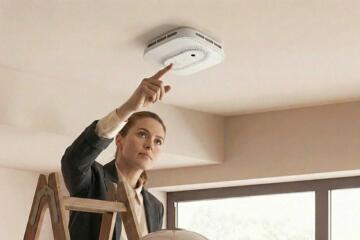
CO alarms can help you notice problems, but they do not replace correct placement. A CO alarm inside a home may alarm after CO has already entered, and alarms can be absent in garages or sheds. If you use alarms, test them per the manufacturer schedule; I’ve seen people discover a “dead” alarm during an outage, which is a late discovery.
Plan For Airflow And Exhaust Direction
Exhaust direction matters because CO follows the exhaust plume and then mixes with surrounding air. Place the generator so that exhaust does not point toward openings. Avoid locations where the exhaust can be trapped by walls, fences, or snowbanks. If you notice exhaust staining on a wall near a generator, that is a sign the plume is contacting the structure and may be reaching openings.
Keep the generator on stable, dry ground and avoid blocking air intakes. Poor ventilation around the generator can cause incomplete combustion, which can increase CO production. If the unit has a muffler heat shield, do not remove it; it helps manage exhaust and nearby surfaces.
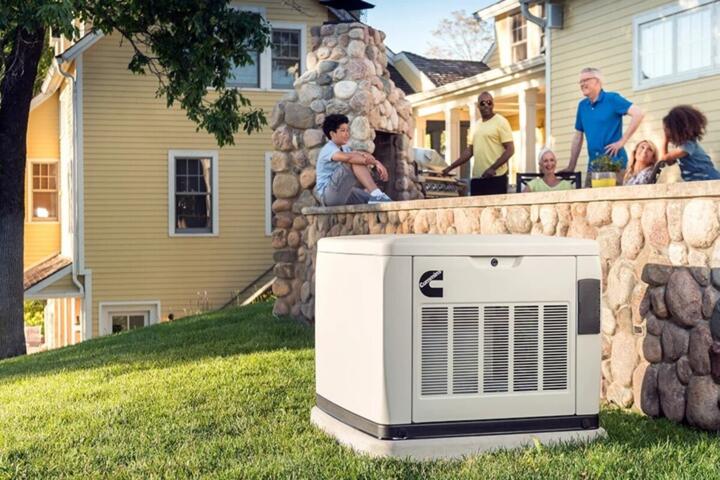
For standby generators, the installation design is part of the safety system. The unit’s placement, exhaust routing, and transfer switch wiring are typically handled under electrical codes and permitting. If you have a standby system, do not relocate the generator yourself; changes can violate the installation assumptions and inspection requirements.
Calculate Loads With Starting Surges
Use the generator nameplate and the appliance labels to plan running and starting needs. Running wattage is usually listed on the appliance, and starting surge can be estimated from motor type, but the generator manual often includes a table for common loads. A refrigerator may run at a few hundred watts but can draw a higher surge at startup. Window AC units can have large startup surges that exceed what people expect from the running label.
As a practical method, list the appliances you want to run, then add their running watts. Next, identify which ones have motors or compressors and apply the generator’s starting surge guidance. If your generator is rated for 3,500 running watts but only 4,000 peak, running multiple motor loads at once can still exceed safe operation even if the running total looks acceptable.
Inverter generators often handle surges differently than non-inverter units, but the manual still governs. If the manual says the generator can run “X” appliances, treat that as a tested scenario rather than a guarantee for every household.
Respect Cord, Breaker, And Outlet Limits
Extension cords are a common failure point. Use cords rated for outdoor use and for the current draw of the load. Undersized cords can overheat, especially with space heaters, kettles, or other high-wattage resistive loads. If you must use cords, keep them as short as practical and avoid daisy-chaining power strips.
Do not connect a generator to household wiring using improvised methods. Transfer switches and interlocks are designed to prevent backfeeding into utility lines. Backfeeding can endanger utility workers and can damage equipment. If you need whole-home power, plan for a transfer switch installation that matches your generator type and electrical panel configuration.
Watch generator behavior during load changes. If the engine hunts, the voltage output fluctuates, or the unit shuts down repeatedly, reduce load and restart. Repeated overload events can shorten engine life and can create hazardous conditions around hot components.
Educational Case Examples
Scenario A: Portable generator near a garage. A homeowner places a 5,000-watt portable generator about 15–20 feet from the garage door during a windy afternoon. The garage door is closed at first, then opened to move a car. CO alarm in the house sounds within minutes. The likely issue is exhaust entering through the open garage door and then mixing into the home through shared air paths. The fix is to relocate the generator farther from openings, keep doors closed, and run only essential loads through properly rated cords.
Scenario B: Load planning with a refrigerator and microwave. During an outage, a user runs a refrigerator and a microwave on a generator rated for 2,000 running watts. The refrigerator starts, then the microwave triggers a shutdown. The running wattage of the microwave may look manageable, but the combined starting surge and transient load can exceed the generator’s surge capability. The practical adjustment is to run the microwave briefly after the refrigerator stabilizes, or to reduce other motor loads and follow the generator manual’s load guidance.
Placement And Load Checklist
| Decision Point | What To Check | Safe Direction | If You’re Unsure |
|---|---|---|---|
| CO placement | Distance from doors, windows, vents; exhaust outlet direction | Exhaust away from openings and airflow paths | Move farther and change wind-facing orientation |
| Load selection | Running watts and starting surges for motor loads | Start motor loads one at a time | Use the generator manual’s load table |
| Cord sizing | Outdoor rating and conductor size for current draw | Short, correctly rated cords only | Replace the cord instead of “making it work” |
| Whole-home power | Transfer switch or interlock design | No backfeeding into utility lines | Stop and consult an electrician |
Step-by-step checklist (practical order):
- Read the generator manual section on “CO safety” and “outdoor use.”
- Choose a location where exhaust cannot reach doors, windows, or vents under typical wind conditions.
- Confirm the generator is stable and not blocking air intakes or exhaust routing.
- List appliances and identify motor loads (refrigerator, freezer, AC, sump pump).
- Plan starting sequence: start one motor load, then add resistive loads if the generator remains stable.
- Use correctly rated outdoor extension cords and avoid adapters that exceed outlet ratings.
- Monitor for abnormal behavior: repeated shutdowns, unusual engine sounds, or overheating cords.
Common Mistakes
People sometimes measure clearance from the wrong point. If the exhaust outlet is offset from the generator body, the plume can reach openings sooner than the “distance” suggests. Measure from the exhaust outlet area and account for wind direction.
Another mistake is running a generator under a deck, in a garage, or near an open window “just for a minute.” CO can accumulate quickly, and “brief use” still produces exhaust. If you need to move the generator, move it before starting the engine.
Load mistakes include using a cord that is too thin for the current draw and then noticing the cord feels hot. Heat on a cord is a warning sign, not a normal operating detail. In my experience, people also underestimate surge loads for refrigerators and freezers, then blame the generator when the real issue is starting surge plus an additional load.
Some users ignore the difference between continuous and peak ratings. A generator that can reach a peak for a short time may not sustain that output while also handling voltage regulation. If the manual lists a “rated” output and a “maximum” output, treat the rated number as the planning target.
FAQ
What CO Clearance Distance Applies?
Use the generator manual and agency guidance that emphasize operating outdoors and away from doors, windows, and vents. A single distance number can’t cover all wind and building conditions, so placement away from openings and exhaust direction away from the building matter as much as distance.
Can I Run A Generator In A Garage?
No. A garage is an enclosed or semi-enclosed space where CO can accumulate and enter the home. Even with the door open, exhaust can be drawn indoors through openings and shared air paths.
How Do I Choose Generator Load Limits?
Plan using both running watts and starting surges for motor loads. Add running watts for what you intend to run, then follow the generator manual’s surge guidance or load table for compressors and pumps.
Why Does My Generator Shut Off When I Add An Appliance?
Overload protection can trip when starting surges exceed the generator’s surge capability or when total load exceeds the generator’s rated output. Reduce the number of motor loads running at the same time and restart in a controlled sequence.
Do CO Alarms Replace Safe Placement?
No. CO alarms warn after CO has accumulated, and they may not be present in garages or near the generator area. Correct outdoor placement and exhaust routing are the primary controls.
Author's Insight
CO clearance and load limits are two separate safety systems that interact through user behavior. People often adjust generator placement after a problem appears, but CO exposure can occur before alarms trigger. Load overloads can also cause shutdowns that lead to hurried changes in wiring and placement.
Evidence-based practice starts with the generator’s manual and the safety sections from U.S. agencies like CPSC and CDC, then applies electrical fundamentals: motor starting surges, cord ampacity, and transfer switch requirements. If you want a concrete starting point, record your generator model and the date you last checked the manual; manuals sometimes change by revision number (I’ve seen “Rev. 3” safety text differ from earlier printings).
For CO risk, treat wind and building openings as variables rather than fixed facts. For load risk, treat nameplate ratings as constraints and plan appliance start order like a checklist, not like a guess.
Key Takeaways
- CO safety depends on exhaust direction and distance from doors, windows, and vents, not just a single measurement.
- Load limits require both running wattage and starting surge planning for motor loads.
- Use correctly rated outdoor extension cords and avoid improvised backfeeding into household wiring.
- Monitor for abnormal signs such as repeated shutdowns or overheating cords, then reduce load and correct setup.