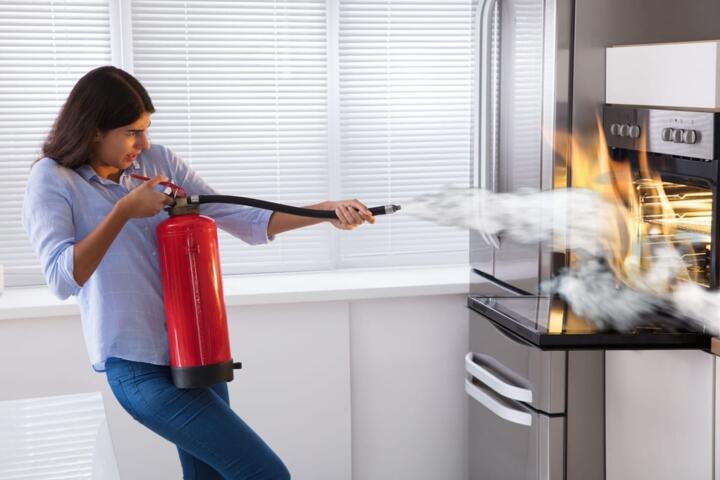
Fire Classes And Ratings
Fire extinguishers are labeled with class ratings that describe the type of fuel they are designed to control. In the United States, the most common labels are Class A for ordinary combustibles, Class B for flammable liquids and gases, and Class C for energized electrical equipment. Some extinguishers also carry Class D for combustible metals and Class K for cooking oils and fats.
Class ratings do not describe “how hot” a fire is; they describe what the agent is meant to interrupt. A Class A extinguisher typically targets materials like wood, paper, and many fabrics by cooling and breaking up the burning surface. A Class B extinguisher is designed to stop flammable liquid or gas fires by separating the fuel from oxygen or interrupting the chemical reaction, depending on the agent. A Class C rating usually means the extinguisher is safe to use on equipment that is energized, because the agent is non-conductive or otherwise appropriate for electrical exposure.
Many household extinguishers show multiple classes, such as “A:B:C.” That multi-class label matters because it reflects testing for those fuel types, not because the extinguisher “works on everything.” The number on the label, such as “2-A:10-B:C,” is a performance rating that roughly indicates the relative size of fire the extinguisher is intended to handle under test conditions. Real fires vary, and the label does not guarantee control once flames spread beyond the tested scenario.
Common Misreads And Gaps
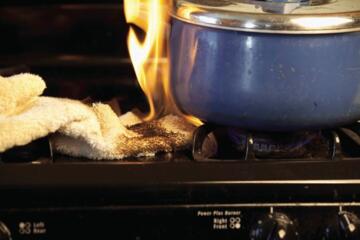
People often treat the class label like a universal match, then aim at the wrong fuel source. A kitchen fire involving cooking oil can look like “grease,” but a standard Class A extinguisher is not designed to handle burning fats and oils. A garage fire involving gasoline or solvents is not a Class A problem either; it is usually Class B, and the agent choice changes how the fire is attacked.
Another frequent gap is confusing “electrical” with “electrical plus fuel.” A power strip fire can be Class C because the equipment is energized, but the burning plastic and nearby combustibles can behave like Class A. If the extinguisher is only rated for Class C without A or B coverage, it may not address the fuel that is actually sustaining the flames. Labels like “A:B:C” help, but they still do not cover all fuels, such as combustible metals in a workshop.
Placement and supporting systems also matter. An extinguisher that is present but blocked by storage is effectively absent when seconds count. Smoke alarms, a clear exit route, and the ability to call emergency services shape outcomes more than the brand on the extinguisher. In many jurisdictions, local fire codes require specific extinguisher types and mounting locations for certain occupancies, but homes and small apartments often follow guidance rather than strict enforcement.
Maintenance is another dependency people skip. Pressure gauges can drift, seals can fail, and hoses can crack. If you check a gauge and it reads “in the green,” that is a good sign, but it does not replace periodic inspection by the manufacturer’s recommended interval. I’ve seen gauges where the needle sits near the boundary after a year of temperature swings—one reason to record readings during routine checks, even if you do not service the unit.
How To Choose By Room
Kitchen: Use Class K Or A:B:C
Cooking fires involving oils and fats are the reason Class K exists. If your extinguisher label includes Class K, it is designed for cooking media and can be more appropriate than general-purpose agents for that specific hazard. Many households use an A:B:C extinguisher in kitchens because it covers flammable liquids and energized equipment, but it may not be the best match for deep-fryer or pan-oil scenarios.
Practical approach: keep the extinguisher near an exit path, not behind the stove where heat and flames can block access. If you have a microwave above the range, mount the extinguisher so you can reach it without leaning over the cooking surface. For a typical apartment, one 2.5-gallon multipurpose unit may be common, while a Class K extinguisher is often smaller and may have a shorter discharge time; check the label for the rated size and expected discharge duration.
Also plan for what you will do after discharge. If flames persist or spread beyond the pan, evacuation and calling emergency services should take priority over repeated attempts.
Garage And Workshop: Match Flammable Liquids
Garages often contain gasoline, paint thinner, solvents, and aerosol fuels. Those hazards align with Class B. If you store flammable liquids, an A:B:C extinguisher can cover many of the common fuels, and it can also handle energized equipment if the label includes C. If you work with combustible metals such as magnesium turnings, wood dust in large quantities, or certain metal powders, Class D becomes relevant, but those situations are less common in typical homes.
Practical approach: choose an extinguisher with a strong Class B rating number for the likely liquid hazards. The “B” number on the label is the clue; higher numbers generally correspond to larger tested fire scenarios. Keep the extinguisher away from direct contact with the stored chemicals and away from areas where a spill could block access. I once reviewed a garage layout where the extinguisher was mounted behind a ladder—fine on paper, useless in practice during a cluttered day.
For workshops, also consider that some fires start as electrical faults and then ignite nearby combustibles. A multipurpose A:B:C extinguisher can be a reasonable compromise when you cannot stock multiple units, but it still does not replace good storage practices for flammables.
Bedrooms And Living Areas: Ordinary Combustibles
In bedrooms and living rooms, the most likely fuels are ordinary combustibles such as bedding, curtains, upholstered furniture, and paper. Those hazards align with Class A. If you already own an A:B:C extinguisher for the kitchen or garage, it often covers Class A as well, so you can use the same unit for general household coverage.
Practical approach: place a Class A-capable extinguisher where you can reach it without passing through smoke. A hallway near bedrooms can work better than a unit stored in a garage corner. Check the extinguisher’s mounting height and accessibility for the people who would realistically use it. If you have mobility limitations, plan for a location that does not require climbing or reaching over obstacles.
Discharge time matters in these rooms because smoke reduces visibility quickly. A smaller extinguisher might be enough for a small wastebasket fire, while a larger unit might be needed for a larger upholstered item. The label’s “A” rating number helps compare units intended for Class A fires.
Laundry And Mechanical Rooms: Watch For Wiring And Fuels
Laundry areas can involve energized appliances and lint, plus occasional flammable products like stain removers. Electrical equipment hazards align with Class C, while lint and many fabrics align with Class A. If you keep flammable liquids in the laundry area, Class B coverage becomes relevant.
Practical approach: use an A:B:C extinguisher if laundry hazards include both electrical appliances and flammable liquids. Keep it near the door to the laundry room or near the path to an exit. Clean dryer vents and avoid overloading dryers; those steps reduce the likelihood of ignition, which is a more reliable safety lever than adding more extinguishers.
For mechanical rooms with boilers or furnaces, follow the equipment manufacturer’s guidance and local code requirements. Some facilities use fixed suppression systems rather than portable extinguishers, and portable units may not be intended for certain equipment hazards.
Room-By-Room Example Scenarios
Scenario 1: A renter in a two-bedroom apartment keeps a single A:B:C extinguisher mounted in the hallway near the kitchen door. During cooking, a small pan fire starts when oil overheats. The extinguisher label includes A:B:C but not K. The renter uses the extinguisher briefly to knock down flames and then evacuates when the fire grows beyond the pan. This scenario shows why Class K can matter for cooking oils, while also showing that multipurpose extinguishers can still help for small, contained incidents.
Scenario 2: A homeowner stores gasoline in a detached garage for a lawn mower and keeps paint thinner in a locked cabinet. The extinguisher mounted near the garage exit is rated 2-A:10-B:C. A small spill ignites near a workbench. The homeowner uses the extinguisher to stop the flames from spreading, then calls emergency services once the fire is no longer contained. The key decision point is the Class B match to flammable liquids, supported by the “B” rating number on the label.
Class Match Checklist
| Room / Likely Fuel | Primary Class | Common Extinguisher Label | Decision Notes |
|---|---|---|---|
| Kitchen (cooking oils) | K | K or K + A:B (if listed) | If only A:B:C is available, use for small, contained incidents; evacuate if flames spread. |
| Garage (gasoline/solvents) | B (often with C) | A:B:C | Compare the “B” number; keep access clear near exits. |
| Bedrooms / Living Areas | A | A:B:C (covers A) | Place where you can reach without passing through smoke. |
| Laundry (appliances + lint) | A + C | A:B:C | If flammables are stored, B coverage matters too. |
Step-by-step placement checklist: (1) Identify the top three fire fuels in each room (cooking oils, flammable liquids, ordinary combustibles, energized equipment). (2) Match the extinguisher label classes to those fuels. (3) Choose locations with a clear path to an exit and minimal blockage by storage. (4) Check the pressure gauge and tamper seal during routine home maintenance; record the date and gauge reading. (5) Practice the PASS technique with a safe training method so the first real use is not the first time you’ve moved the handle.
Common Mistakes To Avoid
Buying an extinguisher without reading the label is the most common error. People may choose a unit based on size alone, then discover it lacks the class needed for their hazard. A garage with flammable liquids needs Class B coverage; a kitchen with cooking oils benefits from Class K coverage.
Another mistake is mounting the extinguisher where it cannot be reached during the first seconds of a fire. Heat can deform plastic mounts, and smoke can block hallways. If you have to open a door, move a chair, or climb over items to reach it, the plan fails under stress.
Some users aim at the flames instead of the fuel source. For many portable extinguishers, the effective approach is to apply the agent at the base of the fire and sweep as the fire responds. If you spray from too far away or from the wrong angle, the discharge may not reach the burning material. I’ve seen people test the reach distance with a phone flashlight and then realize the nozzle pattern is narrower than expected—small details like that matter.
People also forget that extinguishers are time-limited. A discharge that lasts 8–12 seconds versus 20–30 seconds can change whether the fire is contained before reignition. The label and manufacturer documentation provide discharge time estimates, and those estimates should be treated as approximate.
Finally, do not treat extinguisher use as a substitute for evacuation. If the fire grows, blocks your exit, or produces heavy smoke, leaving the area and calling emergency services is the safer decision.
FAQ
What Do A B C Ratings Mean?
A, B, and C are fire class ratings: A targets ordinary combustibles, B targets flammable liquids and gases, and C indicates suitability for use around energized electrical equipment. The numbers next to letters reflect performance in tested scenarios.
Should I Buy A Class K Extinguisher?
If your kitchen fire risk centers on cooking oils and fats, a Class K extinguisher matches that hazard better than a unit labeled only A:B:C. If you cannot store multiple extinguishers, an A:B:C unit can still help for small incidents, but it may not be the best match for grease/oil fires.
Where Should I Mount Extinguishers?
Mount them near exits and in locations you can reach without passing through smoke or blocking obstacles. Avoid placing them behind doors, behind stored items, or in spots where a fire is likely to cut off access.
How Often Should I Inspect Them?
Check the pressure gauge and physical condition regularly, and follow the manufacturer’s inspection and maintenance schedule. Many units require professional service at set intervals, and the label or manual usually states the recommended frequency.
Can One Extinguisher Cover Every Room?
One A:B:C extinguisher can cover many common household hazards across multiple rooms, especially ordinary combustibles, flammable liquids, and energized equipment. It does not cover all specialized hazards like combustible metals, and it may not be the best match for cooking-oil fires.
Author's Insight
Fire extinguisher class ratings are grounded in test methods that match agents to fuel types, so the label is the primary evidence for what the extinguisher is designed to do. Room-by-room planning works best when you list likely fuels first, then match the class letters and compare the numeric ratings. Maintenance and placement often determine whether the extinguisher is usable when needed, which is why gauge checks and clear access matter as much as the purchase decision.
When guidance conflicts with your specific building layout or local code, the safest path is to follow the extinguisher manufacturer’s instructions and any local fire authority requirements. If you want a starting point for training, the PASS technique is widely taught, and a short practice session reduces hesitation during real emergencies.
Key Takeaways
- Match extinguisher class letters to likely fuels in each room: A for ordinary combustibles, B for flammable liquids/gases, C for energized electrical equipment, K for cooking oils, D for combustible metals.
- Use the numeric ratings on the label to compare relative performance for the hazard you expect, not just the extinguisher’s physical size.
- Place extinguishers near exits with clear access paths; blocked access is a common failure mode.
- Inspect gauges and follow manufacturer maintenance intervals; a “green” gauge helps, but it does not replace scheduled service.
- Evacuate and call emergency services when the fire grows, smoke blocks your route, or you cannot control it quickly.