Emergency Numbers Across Borders
Emergency contacts for travel are a mix of universal patterns and country-specific numbers. The most reliable starting point is the emergency dispatch number used in the country where you are physically located, because dispatch routing depends on local networks and language. For medical emergencies, you also want a second layer: your personal contacts and any health details that help responders act quickly.
In many countries, a single-digit or short code reaches police, fire, or medical dispatch. In the European Union, 112 routes to emergency services, and it works across member states. In the United Kingdom, 999 and 112 both reach emergency services, with 112 also working for mobile phones. Outside Europe, the “works everywhere” assumption breaks fast, so your plan needs both a local number and a fallback contact method.
For non-emergency but urgent issues, such as lost documents or consular support, you need the right contact channel for your nationality. Consular lines are not emergency dispatch lines, and they do not replace local police or ambulance services. If you carry a printed card, include both categories: local emergency dispatch and your consulate or embassy contact details.
Common Failures And Dependencies
People often get the numbers wrong in ways that look minor until they matter. A frequent mistake is copying a number from a website without checking the country you will be in, then assuming it routes internationally. Another failure is relying on a single contact method, such as a mobile app or a saved contact that depends on data coverage.
Emergency dispatch routing depends on the local telephone network, the caller’s location, and the dispatch center’s procedures. Even when a code like 112 exists, the call handling language and the type of service routing can vary by country. Some systems prioritize voice calls over text, and some require a minimum level of signal quality. If you test your plan only at home, you miss the part where roaming, call barring, and local carrier behavior can change what actually connects.
Health-related emergencies add another dependency: responders need actionable information, not just a phone number. A contact list that lacks medication names, allergies, and a basic medical summary forces responders to guess. If you carry a “medical emergency contact” but not the underlying medical facts, the contact may still need time to translate details to dispatch.
There is also a privacy dependency. If you store medical details in a way that other people can access without your consent, you may create more risk than you reduce. A printed card with limited fields can be safer than a fully detailed document in a phone that strangers might unlock.
Build A Border-Ready Contact Plan
Write Two Layers Of Numbers
Create a card with two sections: local emergency dispatch and your personal/consular contacts. For local dispatch, use the number that applies to the country you will be in, plus 112 if it is relevant there. For personal contacts, include at least one person who can answer quickly and one backup. Add a note about time zones so your contacts know when to expect your call.
Keep the card short enough to read under stress. Include: your full name as on your passport, your date of birth, and a single line for “medical notes” such as allergies and key medications. I’ve seen travelers write “asthma” but omit the inhaler name; dispatch and responders still need the medication details, not just the condition.
Use A Phone That Can Call Without Data
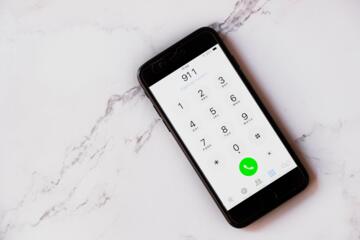
Before travel, test that your phone can place a voice call to the emergency number from a location similar to where you will be staying. Many emergency calls work without mobile data, but roaming settings and carrier restrictions can still interfere. If you use an eSIM or a new SIM, test after activation; a friend’s phone on iOS 17.6 once showed “No Service” for emergency calls until the carrier registration finished, which took longer than expected.
Turn on any setting that improves location sharing for emergency calls if your device supports it. On Android, this often relates to location services and emergency location features; on iPhone, it relates to emergency calling and location permissions. The exact menu names change by version, so check your device’s emergency calling help page rather than relying on memory.
Prepare A Medical Summary For Dispatch
Write a one-page medical summary that your emergency contact can read to dispatch. Include: blood type if you know it, major diagnoses, current medications with generic names, allergies with reaction type, and any implanted devices. If you carry a medical ID bracelet or card, match the wording so responders do not face conflicting information.
For outcomes, aim for speed and clarity rather than completeness. A dispatch call often needs a usable summary within 30–60 seconds. If your card takes longer to read, shorten it and move details to a second page that your contact can access later.
Verify Consular Contacts Before Departure
For lost passports, detention, or welfare checks, consular support is routed through your embassy or consulate. Look up the correct contact for your destination country and save it offline. Many consulates publish a general phone number and an emergency after-hours line; the after-hours line may be limited to specific situations.
Check the consulate page for hours and the type of emergencies they handle. On one trip in March 2024, a traveler used a general embassy email address for an urgent welfare issue; the response time was slow because the inbox was not monitored continuously. Your plan should reflect that difference.
Case Examples For Real Situations
Example 1: Wrong Country Number
A traveler saves “ambulance number” from a blog while planning a trip. On arrival, they call the saved number and reach a non-emergency line that routes slowly. The traveler then calls the local emergency dispatch number listed on their printed card and gets ambulance dispatch within minutes. The difference came from local routing and dispatch center procedures, not from the traveler’s intent.
Example 2: Missing Medication Details
A person with severe allergies collapses. Their emergency contact can describe the allergy history but cannot recall the medication name used for reactions. Dispatch asks follow-up questions, and responders delay while the contact tries to identify the medication from packaging photos. A second card with generic medication names and allergy reaction type would have reduced the back-and-forth.
Checklist And Comparison Table
Use the checklist to decide what to carry and what to verify. The table compares common contact types so you do not mix up dispatch with support services.
| Contact Type | What It Handles | Where It Works | What To Prepare |
|---|---|---|---|
| Local Emergency Dispatch | Police, fire, ambulance response | The country you are in | Your location, brief medical facts, phone number |
| 112 (If Available) | Emergency services routing | Many European countries | Same as local dispatch; language may vary |
| Personal Emergency Contacts | Call-back, document help, medical summary | Wherever your phone can reach them | Your medical summary and consent expectations |
| Consular Support | Welfare checks, lost documents, legal support coordination | Your home country’s mission in the destination | Passport details, location, case description |
- Write the local emergency dispatch number for each destination country on a single card.
- Add 112 if you will be in a region where it is used for emergency routing.
- Include two personal contacts with phone numbers and a note about who can speak which language.
- Attach a short medical summary: allergies, generic medication names, and key diagnoses.
- Save consular after-hours contact details offline and print them if you travel without reliable data.
- Test emergency calling on your device after SIM/eSIM activation, then again after you arrive if you can.
Common Mistakes That Break Plans
One mistake is storing emergency numbers only in a contacts app that syncs through the cloud. If you lose access to the account or the phone is locked, the numbers may not be reachable. Another mistake is using a “medical emergency contact” label without including the actual medical summary that dispatch needs.
People also confuse consular help with emergency dispatch. If you call a consulate for an ambulance request, you may waste time while the consulate tries to route you to local services. Consulates can help coordinate, but they do not replace local emergency response.
Some travelers print a card with outdated numbers. Emergency numbers can change, and even when the code stays the same, the routing behavior can differ by region within a country. Verify the numbers from official sources for your destination before departure.
Finally, avoid over-sharing. A card that lists every diagnosis and every lab result can expose private health information if lost. Use a tiered approach: a short card for dispatch and a separate document for your emergency contact.
FAQ
Does 112 Work Everywhere?
112 works for emergency services in many European countries, but it does not cover every country worldwide. For travel outside Europe, use the local emergency dispatch number for the destination.
What Number Should I Call For Medical Emergencies?
Call the local emergency dispatch number in the country where you are located. Dispatch centers route calls to ambulance services based on local procedures.
Should I Save Emergency Numbers In My Phone?
Save them, but also print them or store them in a way that works without account access. Phone access can fail due to lock screens, roaming issues, or missing SIM registration.
How Do I Prepare My Emergency Contact?
Give them a short medical summary with generic medication names, allergies, and key diagnoses, plus your location and travel dates. Practice a simple script: “Call dispatch, then read the medical summary.”
Can Consulates Help In A Medical Emergency?
Consulates can help with coordination such as contacting family or assisting with document issues, but local emergency dispatch handles ambulance and urgent care. Use consular support for after-the-fact coordination when appropriate.
Author's Insight
Emergency calling across borders depends less on “international” contacts and more on local dispatch routing, device behavior, and the information responders need. A practical plan treats emergency dispatch as the first layer and personal/consular support as the second layer. Evidence-based preparation focuses on testable steps: verify destination numbers, confirm voice calling works after SIM activation, and keep a short medical summary that a third party can read quickly.
Because country procedures vary, the safest approach is to check official government or telecom guidance for each destination before travel. If you travel frequently, update your card on a schedule tied to your next trip rather than relying on last year’s printout.
Key Takeaways
- Use the local emergency dispatch number for where you are, and treat 112 as a region-specific option rather than a universal guarantee.
- Carry two layers: dispatch numbers for immediate response and personal/consular contacts for coordination.
- Include a short medical summary with generic medication names and allergies so dispatch questions get answered fast.
- Verify numbers and test emergency calling after SIM/eSIM activation; roaming and registration delays can change what works.
- Keep private health details minimal on a public card, and store fuller information separately for your emergency contact.